Rainy Season Plumbing Checklist for Studio City and Valley Homes
Posted by NanaNana on October 19, 2026
The first real storm of the season always brings the same calls: a toilet bubbling when the shower runs, water coming up through a floor drain, or a yard that turns into a pond by the back door. Most of these problems start months earlier, during the dry summer, and most of them can be headed off with an hour of checking now. Here’s the checklist our family uses with homeowners in Studio City, Sherman Oaks, Encino and across the Valley before the rain starts.
Why the first storm causes so many sewer backups
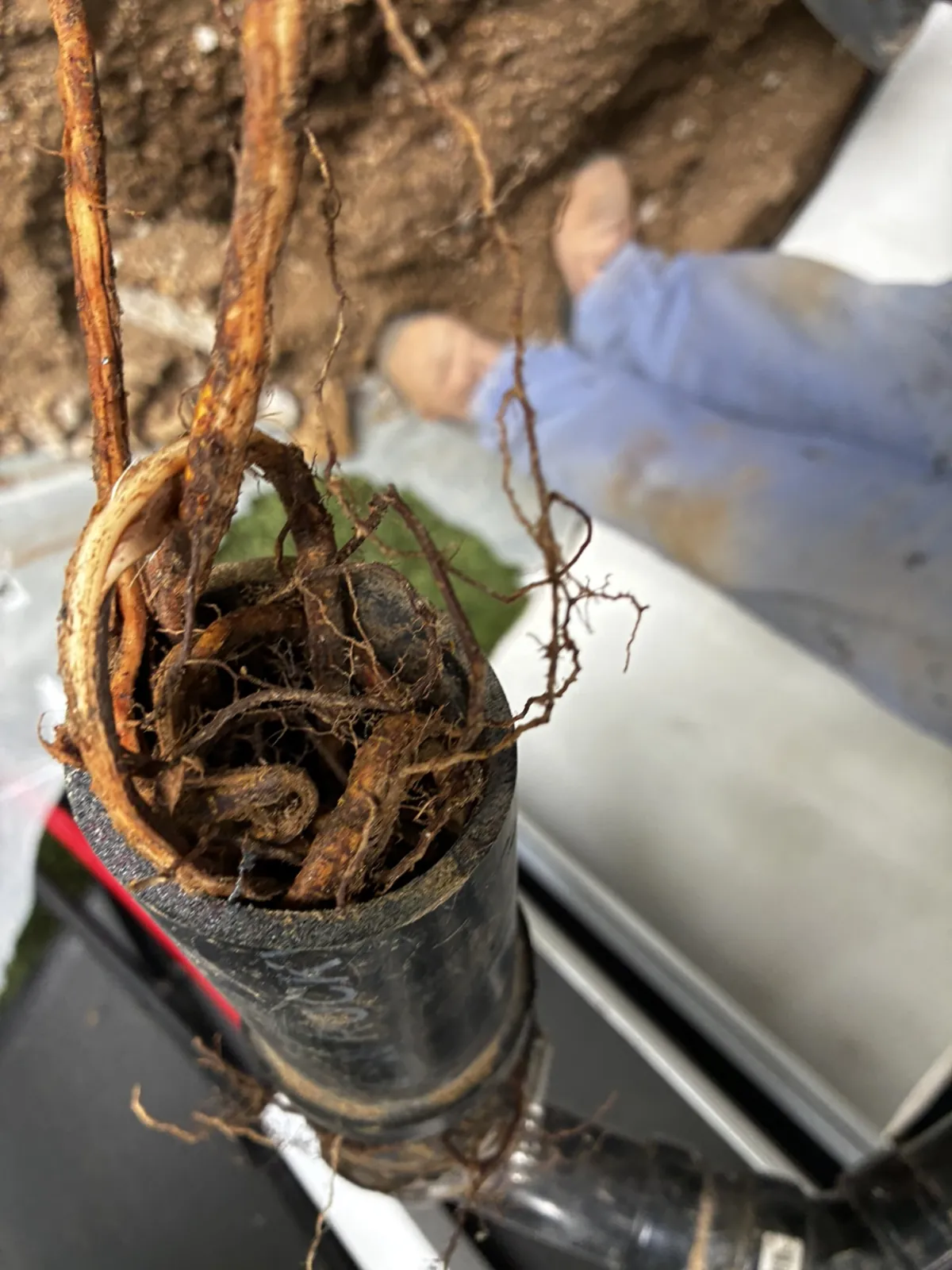
All summer, tree roots keep growing toward the moisture inside older sewer lines, and kitchen grease slowly coats the inside of the pipe. Nothing seems wrong because household flow is low. Then a heavy rain soaks the ground, roots swell, and extra water finds its way into cracked joints. A line that was only partly blocked can’t keep up, and the water backs up into the lowest drain in the house, usually a shower, tub or ground-floor toilet.
Many homes in Studio City and the Valley were built in the 1940s through the 1960s with clay or cast-iron sewer lines. Those materials hold up for a long time, but clay joints are exactly where roots get in.
Roots like these are why the first big storm backs up so many sewer lines.
Your 7-step checklist before the rain
1. Find your sewer cleanout
The cleanout is a capped pipe, usually 3 or 4 inches across, near the foundation or close to where the sewer line leaves the house. It’s how a plumber reaches your main line without pulling a toilet. Find it now, make sure the cap isn’t buried under mulch or a planter, and keep the path to it clear. If your home doesn’t have one, we can install a sewer cleanout so the line can be cleared quickly next time.
2. Notice the warning signs
Slow drains in more than one fixture, gurgling in a toilet when the washer drains, or a sewer smell near the yard are all signs the main line is narrowing. One slow sink is usually a local clog. Several at once usually points to the main line.
3. Book a camera inspection if you’ve had trouble this year
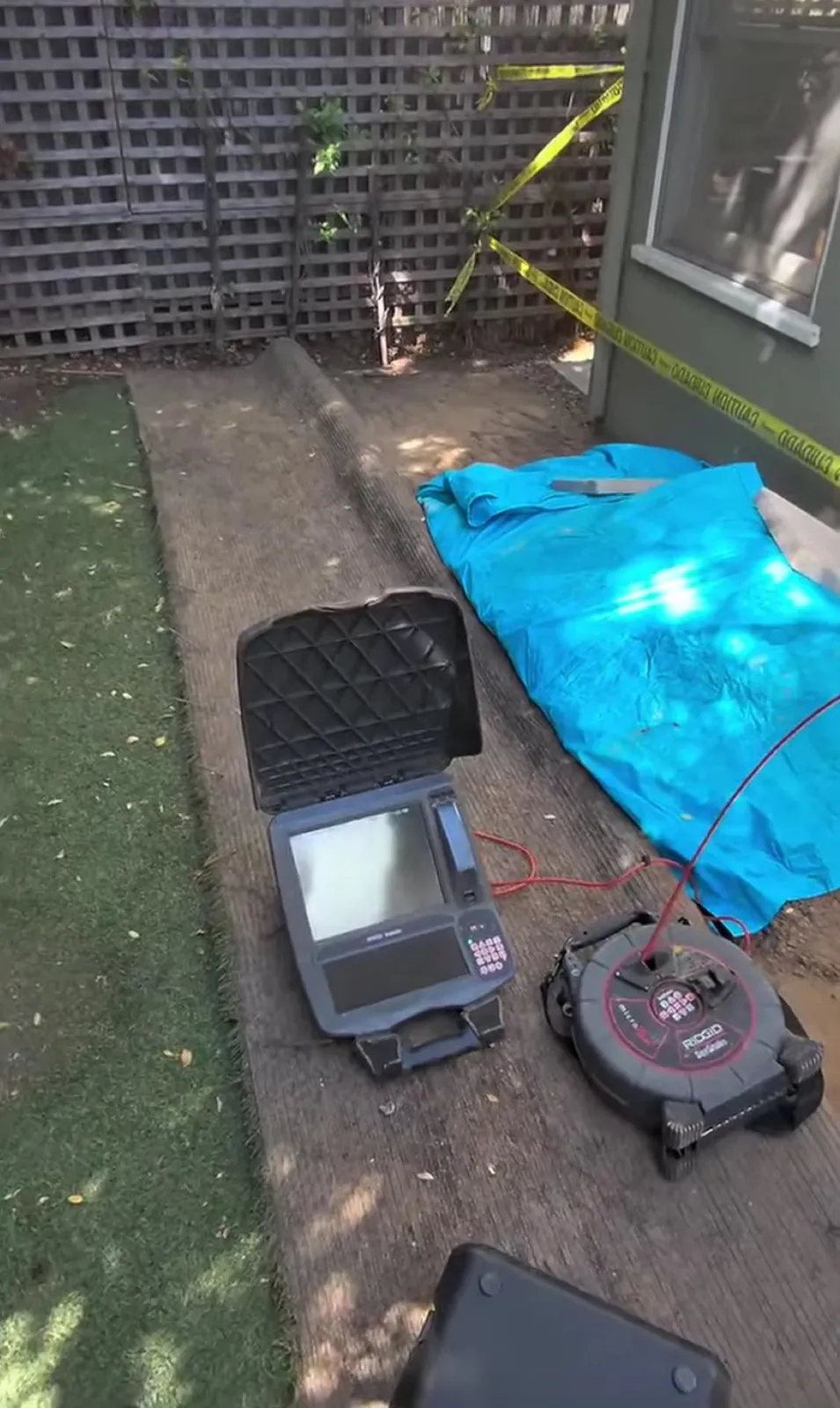
If you’ve had a backup, a slow main line or a rooter visit in the last 12 months, a sewer camera inspection shows what’s actually going on inside the pipe: roots, a crack, a sag (called a belly) or a separated joint. You see the video, and you can decide what to do based on the real condition of the line rather than a guess.
4. Clear root-heavy lines the right way
For light buildup, a cable machine clears the line. For heavy roots or years of grease, hydro jetting scours the pipe walls with high-pressure water so the line flows at full size again. Our rooter service page explains when each one makes sense. If the camera shows a broken section, clearing it again only buys time, and a repair of that section is the lasting fix.
5. Keep rain water out of the sewer
Gutters, downspouts and yard drains should send water away from the house and into the yard or street drainage, never into a sewer cleanout or a floor drain. Clean leaves out of gutters and yard drains now, and check that downspouts empty at least a few feet away from the foundation. On hillside lots above Ventura Boulevard and in the canyons, this matters even more, because water from uphill collects along the back of the house.
6. Test your sump or sewage pump
Some hillside and lower-level homes rely on a pump to lift water or sewage. Pour a bucket of water into the pit and make sure the pump turns on, empties it, and shuts off. If it hums but doesn’t move water, or the alarm is unplugged, have it looked at before the storm, not during it. Roots can even find their way into pump tanks, as we found on a job in Encino.
7. Know where your main water shutoff is
Rain doesn’t cause burst pipes the way a freeze does, but storms do bring power outages, shifting soil and a lot of time at home, which is when people notice leaks. Find your main shutoff (usually near the front of the house or by the water meter), make sure it turns, and show everyone in the house where it is. A stuck or corroded valve is worth replacing on a dry day.
A camera inspection shows roots, cracks and sags before the rain does.
If water does come in
Stop using every sink, shower, toilet and the washing machine. Each flush adds more water to a blocked line.
Keep kids and pets away from any sewage water.
If water is near outlets or cords, stay out of it and shut off power to that area only if you can do it safely from a dry spot.
Take photos and video of the water and anything damaged. Your insurance company will ask for them.
Call or text us at 855-840-7800. A live person answers 24 hours a day, and you can text a photo so we know what we’re walking into.
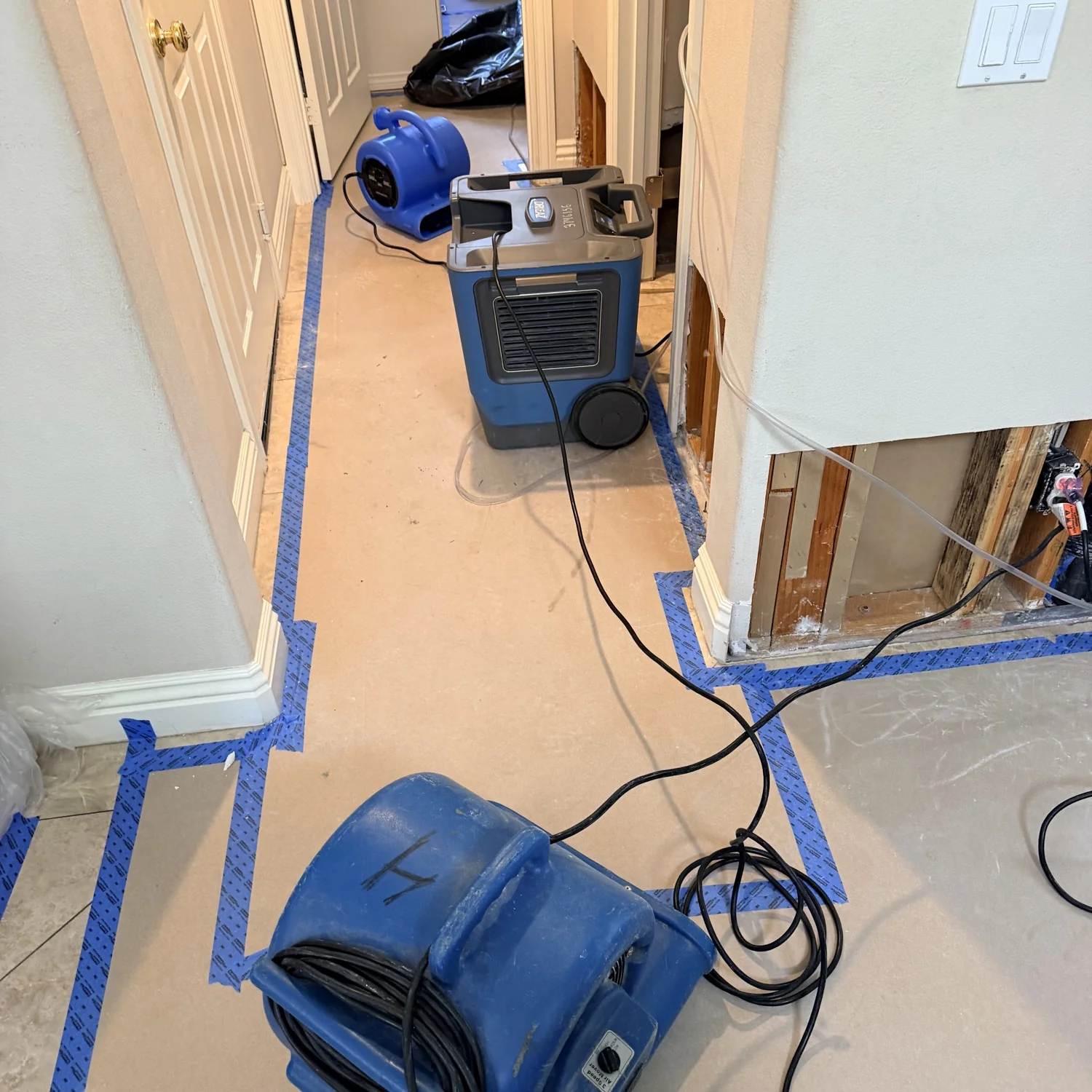
Once the line is clear, standing water needs to come out fast and the walls and floors need to dry properly. We handle water damage and structural drying after plumbing problems, and we can help with your insurance claim.
Drying equipment set up in a Woodland Hills hallway after a leak.
Want us to check it before the storms?
We’re a third-generation, family-owned plumbing company based in Studio City, and we’ve been looking after homes across the Valley and Los Angeles for more than 15 years. A live person answers 24/7, same-day service is guaranteed, and every job is backed by our 100% satisfaction guarantee (CA license #985488). If you’d like your sewer line cleared or inspected before the rain, or you just want a second opinion on something you noticed, call or text 855-840-7800.
We serve Studio City, Sherman Oaks, Encino, Tarzana, Woodland Hills, North Hollywood, Toluca Lake and the rest of our service area.
Common questions
Why does my sewer back up during the first big rain?
After a dry summer, roots and grease narrow the sewer line. When a storm adds extra water, a partly blocked line can’t carry it and it backs up into the lowest drain in the house. Clearing the line before the season is the best prevention.
Should I get my sewer line inspected before the rainy season?
If you’ve had slow drains, gurgling or a backup in the past year, yes. A camera inspection shows whether roots, cracks or a sag need attention before the rain makes them worse.
Is hydro jetting better than snaking?
Snaking opens a path through a clog. Hydro jetting cleans the full inside of the pipe, so it’s usually the better choice for heavy roots or grease. Neither one fixes a broken pipe; that needs a repair.
Can I get a plumber in Studio City during a storm at night?
Yes. Flood Brothers Plumbing is open 24 hours a day, including weekends and holidays, and a live person answers at 855-840-7800. Same-day service is guaranteed.